

Radiant skin has a way of making you feel refreshed, even on days when your schedule is anything but relaxing. Yet achieving that healthy glow can become frustrating when dullness, uneven texture, and fine lines persist despite a consistent skincare routine.
That’s why regenerative skincare has attracted so much attention, particularly treatments featuring exosomes. These tiny cellular particles are being studied for their potential role in skin repair and rejuvenation, making the exosome facial an intriguing option for patients exploring newer aesthetic treatments.
But there’s an important difference between promising science and proven results. While early research suggests that exosomes may have applications in skin health, many of the claims surrounding these treatments are still being investigated.
Before booking an appointment, it’s worth understanding what exosomes actually do and what current evidence supports. Keep reading as we explore the potential benefits, limitations, and safety considerations behind this growing skincare trend.
7 Things to Know About Exosome Facials
Exosome treatments are often promoted as the next generation of regenerative skincare, but their scientific foundation is more complicated than the advertising suggests. Understanding these ten considerations can help you separate promising possibilities from benefits that haven’t yet been established.
1. Exosomes Are Cellular Messengers
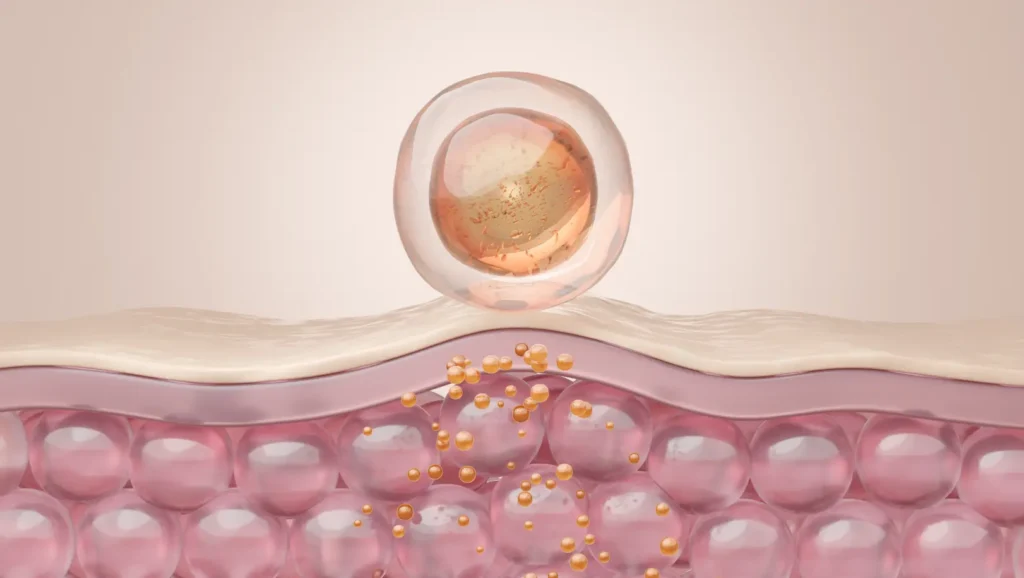
To understand the excitement surrounding exosomes, it helps to know what they actually are. Exosomes are tiny extracellular vesicles released by cells, carrying biological materials such as proteins, lipids, and nucleic acids.
These particles participate in communication between cells. Researchers are studying how their contents may influence inflammation, tissue repair, and other biological processes.
In aesthetic medicine, this has generated interest in whether exosome-containing preparations could support skin rejuvenation. The theory is that certain cellular signals might influence how skin responds to damage or aging.
However, not every product marketed as an exosome treatment contains the same materials. Products can differ according to their source, processing methods, purity, and composition. Some formulations may contain extracellular vesicles alongside other ingredients. Others may use terminology that doesn’t clearly establish the presence or identity of exosomes.
This distinction matters because biological activity observed in a laboratory doesn’t automatically translate into a predictable cosmetic result. The specific preparation, its quality, and its method of application all influence what can reasonably be expected.
Patients should therefore approach an exosome facial as a treatment category requiring careful evaluation, rather than assuming every product works the same way.
2. Skin Repair Is a Major Research Focus
One of the most interesting areas of exosome research involves cellular communication during tissue repair. Scientists are investigating whether certain extracellular vesicles can influence processes associated with healing and skin regeneration.
Laboratory and animal studies have explored effects on fibroblasts, inflammation, and the production of components involved in skin structure. These findings have contributed to growing interest in regenerative aesthetics.
However, skin repair is a complex process. It involves immune responses, cellular activity, blood supply, and the organization of structural proteins.
The presence of growth-related signals doesn’t mean a topical treatment will automatically improve these processes in human skin. A product must reach the relevant tissues and produce a meaningful biological effect.
When reviewing exosomes skin evidence, it’s important to distinguish laboratory findings from well-controlled human clinical trials. Both contribute to scientific understanding, but they don’t provide the same level of evidence.
Early studies offer reasons for continued investigation. They do not yet establish that commercially available exosome facials reliably accelerate healing or reverse visible skin aging. For patients, the practical takeaway is that the proposed mechanism is interesting, but treatment outcomes remain uncertain.
3. Collagen Support Is Still Being Studied
Collagen helps maintain the skin’s firmness and structure, while elastin contributes to its ability to stretch and recover. Changes in these proteins are part of the natural aging process.
Some preclinical studies suggest that extracellular vesicles may influence fibroblast activity and pathways associated with collagen production. These findings have led to claims that exosome treatments can improve firmness and fine lines.
However, the results of early experiments shouldn’t be interpreted as proof that an exosome facial can restore lost collagen in patients. Human studies remain relatively limited, and products vary considerably.
Even when a study reports improvements in skin appearance, it can be difficult to determine how much of the change came from the exosome preparation. Other ingredients, treatment techniques, and accompanying procedures may contribute.
For example, a facial combining microneedling with an exosome-containing product introduces two separate interventions. Improvements cannot automatically be attributed to the exosomes alone.
Patients interested in firmer skin should ask whether the proposed treatment has been evaluated in controlled human studies. It’s also reasonable to request information about the specific product being used.
Collagen remodeling is a gradual biological process, and dramatic claims deserve careful scrutiny. Promising research is not the same as established clinical effectiveness.
4. Texture Improvements Are Possible, Not Guaranteed
Uneven skin texture can make a complexion look less smooth, particularly under bright lighting or makeup. Acne scars, enlarged-looking pores, and superficial irregularities are common reasons patients explore regenerative treatments.
Some early studies have investigated extracellular vesicle preparations for improving aspects of skin quality. However, the evidence remains insufficient to predict consistent improvements from commercially offered exosome facials.
This is especially important when treatments are paired with established procedures. Microneedling, for example, can independently stimulate tissue remodeling through controlled micro-injuries.
If a patient notices smoother-looking skin after a combined treatment, the improvement may reflect the microneedling procedure rather than an additional effect from exosomes. Different textural concerns also require different approaches. Mild roughness is not the same as deep acne scarring, and a treatment suitable for one may offer little benefit for the other.
Patients should be cautious of claims suggesting that exosomes can erase scars or produce poreless skin. Those outcomes aren’t supported by reliable clinical evidence. A professional evaluation can help identify whether a treatment with a stronger evidence base may be more appropriate for the concern being addressed.
5. Exosome Microneedling Raises Extra Questions
Microneedling creates tiny channels in the skin using fine needles. This controlled injury activates a healing response and is used to address selected concerns involving texture and skin quality.
Some aesthetic practices combine the procedure with products marketed as exosome serums. The idea is that applying these preparations after microneedling may increase their contact with treated tissue.
However, exosome microneedling raises important safety and regulatory questions. Creating channels in the skin changes the potential exposure compared with applying a product to intact skin.
A product intended only for topical cosmetic use should not automatically be assumed suitable for application to freshly microneedled skin. Sterility, contamination risks, and intended use all matter.
The FDA has stated that there are currently no FDA-approved exosome products. This means patients should not assume an exosome preparation has been evaluated and authorized for injection or regenerative skin treatment.
Potential complications from microneedling itself include infection, irritation, pigmentation changes, and scarring. Adding an inadequately characterized biological preparation may introduce further uncertainty.
Before considering a combined procedure, ask whether the specific product is appropriate for the intended route of administration. A provider should be able to explain its regulatory status and available safety information.
6. Exosomes and PRP Aren’t the Same
Regenerative treatments are often grouped together because they involve biological processes associated with healing. However, platelet-rich plasma and exosome-based preparations are not interchangeable.
PRP is prepared from a patient’s own blood. The sample is processed to concentrate platelets, which contain growth factors involved in tissue repair. Exosome products, by contrast, may be derived from cultured cells or other biological sources. Their composition depends on the source material and manufacturing process.
When comparing exosome vs. PRP treatments, the differences extend beyond how the products are prepared. Their regulatory status, clinical evidence, and potential risks also vary.
PRP has been studied for several aesthetic and medical applications, although results differ by indication and preparation method. Exosome-based skin rejuvenation remains an emerging research area with substantial evidence gaps.
Neither treatment should be presented as universally effective. However, a product described as newer or more advanced isn’t necessarily better supported by science. Patients should ask what evidence applies to the exact treatment being offered. This is more useful than comparing broad marketing claims about regeneration.
7. Safety Deserves Serious Attention
A treatment can sound natural and still carry meaningful risks. Biological products require careful evaluation because their composition, purity, and effects may not be fully understood.
The FDA has warned consumers about unapproved exosome products and reported serious adverse events associated with certain unapproved products. The agency has also emphasized that no exosome products are currently FDA-approved.
These warnings are particularly relevant to products administered through injections or other procedures that expose deeper tissues. Potential concerns include contamination, inflammatory reactions, and unpredictable biological effects.
The safety of a product also depends on its manufacturing and handling. Without adequate controls, biological preparations may contain unwanted substances or vary from batch to batch.
When evaluating exosome safety, patients should ask where the product comes from, how it is manufactured, and whether its intended use is supported by appropriate regulatory authorization.
A product’s appearance on a professional website doesn’t establish that it has FDA approval. Similarly, descriptions such as medical-grade or regenerative don’t replace clinical safety data.
If a provider cannot clearly explain the product’s source and intended use, that uncertainty should influence your decision. Patient safety matters more than being among the first to try a new treatment.
Let Evidence Guide Your Glow
Beautiful skin deserves thoughtful care, not exaggerated promises. Exosomes represent an interesting area of regenerative research, but understanding their limitations is just as important as recognizing their potential.
At For A New You in Holliston, MA, patients can explore personalized aesthetic care with their individual skin concerns in mind.
Schedule a consultation to discuss your goals, ask informed questions, and consider treatments that offer an appropriate balance of benefits, evidence, and safety!