
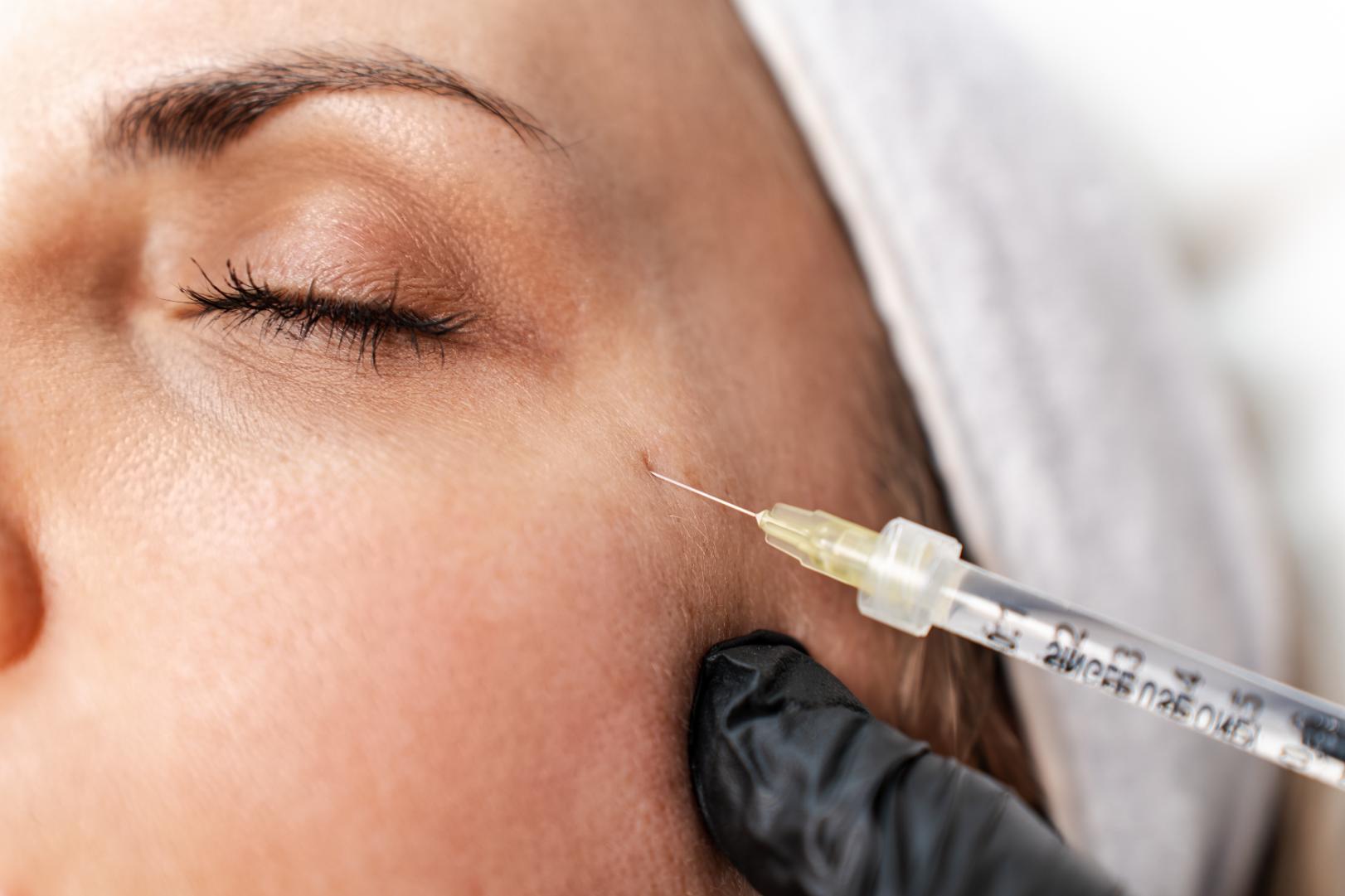
The mirror doesn’t always draw your attention to your face. Sometimes it’s the fine folds above your knees or skin on your arms that looks thinner than it used to. You can feel comfortable in your body and still want a little extra firmness.
Sculptra is attracting interest for its ability to stimulate collagen over time. Beyond facial rejuvenation, providers are exploring its potential for selected body concerns.
Continue reading to learn where it may help, what results can realistically look like, and which details matter before booking.
The Body Basics
Sculptra body treatment focuses on improving skin quality in selected areas. The following points explain the potential benefits, while keeping the science and the practical details in perspective.
1. Collagen Comes First
Sculptra contains poly-L-lactic acid, or PLLA, a synthetic material that gradually breaks down in the body. Its particles stimulate a tissue response that encourages collagen production. Collagen gives skin structural support, helping it maintain firmness.
A body collagen treatment aims to improve that support over time. For appropriate patients, the potential payoff is smoother-looking texture and a modest improvement in laxity. It’s an appealing idea when the concern is skin that looks finely wrinkled or less firm.
This doesn’t mean every loose area needs an injection. Skin texture, excess skin, fat, and muscle shape can all affect the same area. Identifying the main concern gives treatment a clearer purpose.

2. Body Use Is Off-Label
The phrase Sculptra off face describes treatment outside the product’s familiar facial applications. In the United States, its FDA-approved indications concern facial wrinkles and certain facial volume deficiencies. Treatment of the chest, arms, or knees is off-label.
That means the FDA has not approved Sculptra for those body uses. A provider should explain the evidence for the proposed area, the uncertainties, and the alternatives. Approval for facial treatment doesn’t establish the same benefits everywhere else.
Think of a biostimulator body consultation as a chance to get specific. Ask which product is being considered, why it fits your concern, and how the provider will evaluate improvement. Different collagen-stimulating injectables aren’t automatically interchangeable.
3. Chest Texture May Improve
The décolletage is the upper chest, where fine wrinkles can become noticeable even when your facial routine is working beautifully. Sculptra has been studied here for improving wrinkles and skin quality. The goal concerns the skin’s appearance.
A small study involving women with moderate to severe chest wrinkles reported improvement and high satisfaction over nine months. Patients also reported better texture and smoothness. However, the study had no untreated comparison group, so the findings need to be interpreted with that limitation.
If you’re considering Sculptra décolletage in Holliston MA, ask whether your main concern is wrinkling, pigmentation, or both. A collagen-stimulating injectable doesn’t directly remove sun spots. Different concerns may call for different treatments, and the plan should explain that clearly.
4. Arms Can Look Smoother
Upper arms can develop fine creases and a thinner-looking surface, even when you stay active. Sculptra arms treatment is being explored as an option for improving skin quality and mild looseness.
A recent small study comparing two PLLA products, including Sculptra, found improvements in upper-arm appearance and skin elasticity over several months. Both arms received treatment, so the study couldn’t compare injections with leaving the skin untreated. The results are encouraging, with more research still needed.
For patients seeking a crepey skin treatment, the distinction between surface texture and hanging skin matters. Sculptra doesn’t remove a fold of excess tissue or build arm muscle. A modest improvement in skin quality may be worthwhile when that matches your goal.
5. Knees Need a Closer Look
The phrase Sculptra knees refers to treating skin around the knee, usually above it. This is an aesthetic skin treatment, with no role in treating joint pain or arthritis.
Research here offers a useful reality check. In a small controlled trial, investigators rated treated knees as improved compared with placebo. Patients’ own ratings and satisfaction did not show a clear difference between the two sides.
That doesn’t make the treatment pointless. It suggests that a measurable change may be too subtle to meet every patient’s expectations. Ask what improvement would actually look like when you’re standing, sitting, and moving. Skin needs to fold when a knee bends, and normal movement shouldn’t become an unrealistic treatment target.
6. Results Build Gradually
Gradual change is part of Sculptra’s appeal. Collagen production takes time, so improvements develop over weeks to months rather than appearing as a finished result on treatment day.
Early fullness can reflect the fluid used to prepare the product and temporary swelling. As that settles, the area may look closer to its starting point. That early change doesn’t tell you whether your eventual result will meet your goals.
Body studies have often used a series of appointments, with treatments spaced several weeks apart. Your schedule should reflect the area, skin condition, and response. There isn’t one proven session count that applies to every body treatment.
Likewise, the familiar claim that Sculptra can last up to two years comes from facial treatment research. Body results need their own discussion. Ask what follow-up evidence exists for your area and how maintenance decisions will be made.
7. Your Starting Point Matters
Sculptra for skin laxity may be considered when the concern is relatively mild looseness or crepiness. Patients hoping to improve texture generally have different needs from patients seeking removal of substantial excess skin.
A provider should examine the area at rest and during movement. Skin thickness, previous procedures, scars, and changes in weight can influence the assessment. Your medical history matters just as much as the appearance you want.
Be cautious with the phrase body skin tightening injectable if it sounds like a guaranteed lift. Sculptra doesn’t replace surgical skin removal. A consultation may identify another approach that better matches pronounced sagging or a larger contour change.
You can also choose to start with one concern. Defining what would make treatment worthwhile helps keep the plan focused, especially when several areas bother you.
8. Aftercare Is Part of Treatment
An appointment should begin with a review of your goals and the proposed treatment area. Your provider can explain the injection process, comfort measures, likely recovery, and the plan for reassessment.
One practical advantage is that injections don’t require surgical incisions or stitches. For selected patients, that can make treatment easier to fit around everyday commitments. Still, arranging a series means thinking beyond the first visit. If you’re traveling soon, discuss whether you can attend the recommended follow-up appointments and easily contact the practice afterward.
Redness, tenderness, swelling, or bruising can follow treatment. Leave breathing room before a holiday, wedding, or event where the treated area will be visible. A quick appointment doesn’t necessarily mean the skin will look untouched afterward.
Follow the instructions given for your specific treatment, including any massage guidance. Don’t improvise vigorous massage or add other procedures before checking with your provider. Ask when to resume strenuous exercise and what symptoms should prompt a call.

9. Safety Deserves Attention
Sculptra requires an appropriately trained medical professional who understands the anatomy of the treatment area. Small lumps or nodules can appear later, sometimes months after treatment, and may need medical care.
Sculptra should not be used in patients with allergies to its ingredients, a history of anaphylaxis, or multiple severe allergies. It is also unsuitable for patients prone to keloids or other raised scars. Tell your provider about reactions to local anesthetics, too.
Active infection or inflammation in the treatment area should prompt postponement. Safety during pregnancy and breastfeeding hasn’t been established. Share your medications, supplements, medical conditions, and any previous injectable treatments before proceeding.
Another point to discuss is reversibility. Removing Sculptra can be more difficult than dissolving a hyaluronic acid filler. Careful selection and planned reassessment matter, particularly when treating thinner skin or considering additional product after an earlier session.
Rare but serious complications include blocked blood vessels and tissue damage. Unusual or worsening pain, pale or dusky skin, or vision changes need immediate medical attention. Knowing how to contact your provider afterward is part of a complete treatment plan.
Explore Your Options at For A New You
Here at For A New You in Holliston, MA, we offer Sculptra and personalized consultations to discuss your aesthetic goals and treatment options.
Tell us which areas concern you and what kind of change would feel worthwhile. We can explain the services available and whether a collagen-stimulating approach deserves consideration.
Schedule a consultation to discuss Sculptra and build a plan around your skin, expectations, and comfort level.